Homes that cost less to run.
No gas connections, fabric first, and landscape that leaves each site with more wildlife than it had. Figures below are predicted design values and illustrative.

Fabric first
Insulation, airtightness and window quality come before technology. A well-built shell needs a smaller heat pump and keeps bills predictable.
Heat
Air source heat pumps with underfloor heating downstairs. Low flow temperatures, sized by a heat-loss calculation for each plot, not each house type.
Power
Solar PV on larger homes and on any roof that faces within 45° of south; battery ready wiring throughout.
Landscape
Hedges retained and gapped up with native species; orchards and meadows managed by the residents' company; a bird or bat box on every home.
Water
Flow-restricted taps and showers, water butts in every garden, and ponds and swales instead of underground tanks where the ground allows.
Travel
EV charging to every home with a drive or garage, cycle storage to every home, and footpath links to the village built before the first occupation.
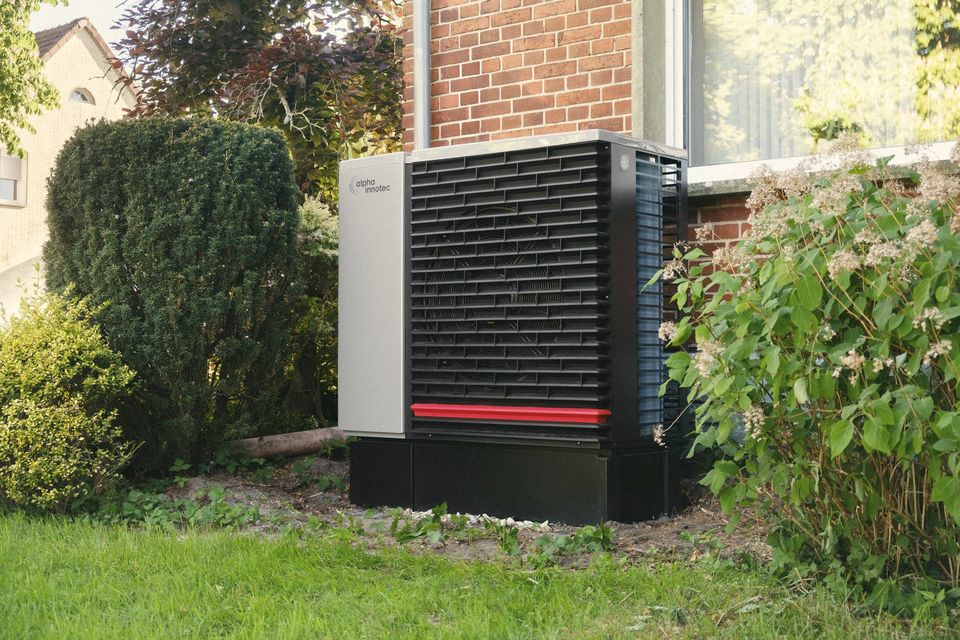
Fig. 2 · Heat pumpPhotograph indicative
What we have not solved yet.
Brick and concrete still carry most of the carbon in our homes. We are trialling a lower-carbon block and lime mortars at Kiln Meadow, and we will publish what we learn, including if it does not work.
Heat pumps are quieter and more efficient than they were, but they need understanding. Every buyer gets a home demonstration and a one-page guide written by our own engineers.