Nairobi to Mara North
Morning flight from Wilson to the Mara North airstrip, 45 minutes over the Rift. Lunch at Emayian Camp, then your vehicle fitting: seat, gimbal arm height and bag. First drive at four, to the Enkoyanai ridge for sunset.
Photo · Devon MacMillan
01Kenya · Mara North Conservancy · August
Eight nights with three prides, a cheetah coalition and the Mara River crossings, from a private conservancy where we can leave the track, stay out after dark and wait as long as the light asks.
The photographic brief
August in the Mara is dry, bright and full. The grass is cropped short by the migration, which opens the plains for low-angle work, and the dust the herds kick up turns the last forty minutes of every day the colour of brass.
Mara North is a private conservancy of 30,000 hectares on the reserve's northern edge, limited to one vehicle per seven hundred acres. We can drive off-road to position for light, sit at a sighting without a queue forming, and go out on night drives — none of which is allowed in the National Reserve itself.
The equator is 150 km north: the sun rises and sets fast and almost vertically, so golden hour is short and we plan positions the evening before.
Recommended kit
There is a 15 kg soft-bag limit on the Wilson to Mara flight, camera bag included. If your long lens tips you over, hire ours: it will be waiting in the vehicle, cleaned and calibrated for your body.
Lens hire pricesDay by day
The shape stays fixed; the order bends to the animals and the weather. Expect two drives a day, each between four and six hours.
Morning flight from Wilson to the Mara North airstrip, 45 minutes over the Rift. Lunch at Emayian Camp, then your vehicle fitting: seat, gimbal arm height and bag. First drive at four, to the Enkoyanai ridge for sunset.
Out at 05:50 to find the pride before the sun clears the escarpment. The hosts ride with each pair in turn, setting up back-button focus and auto-ISO limits for the light we'll actually meet. Afternoon: your first image review.
A full day out with the five cheetah, lunch packed. When they hunt we position for the run, not the kill: side-on, sun behind, panning at 1/60s and then 1/3200s for the frozen frame.
A long day inside the National Reserve at the crossing points, leaving at 05:15. Crossings cannot be promised; patience can. We wait off the bank with engines off and work the herds gathering on the far side while we do.
Morning in a portable ground blind at a waterhole the hosts have watched all season, at a lens height of 40 cm. Afternoon editing session one: culling, colour and making dusty skies behave in Lightroom and Capture One.
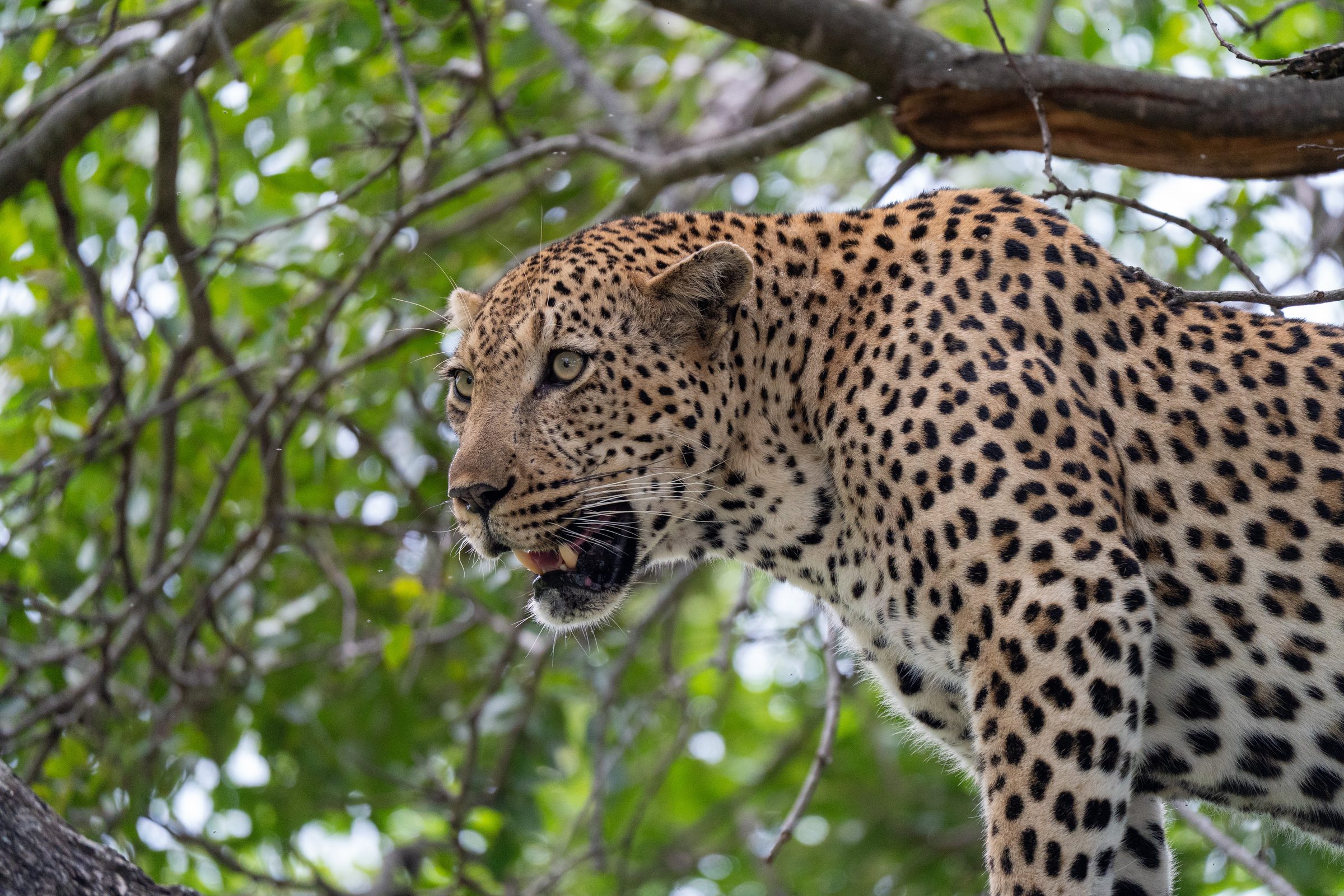
A late afternoon drive that runs into the night, looking for the Olare Orok leopard as she leaves the lugga to hunt. Red-filtered lamps only, never a white spotlight in the eyes. Dinner is a bush supper, wherever we end up.
Two days built around what each pair still wants: another try at the cheetah, a landscape from the Aitong hills, the cubs in the late light. Editing session two on day seven, and a one-to-one portfolio review with a host. On the last night, everyone shows ten frames.
A final dawn drive, brunch, and the late-morning flight back to Wilson in time for evening international connections. Your selects, graded by the hosts, follow by email within a fortnight.
Your hosts
Former picture editor at a London Sunday paper, now based in Nanyuki. Imogen leads on positioning and light; she'll have you out of the vehicle's shadow before you know it was there.
Guided in the Mara for nine years before he picked up a camera. Daniel reads behaviour a minute ahead of the rest of us and teaches the editing sessions with unnerving patience.
The camp
Six canvas tents on the bank of the Olare Orok, eight minutes from the Enkoyanai ridge. We take the whole camp for each departure, so the kitchen keeps our hours rather than the other way round. Simple, comfortable, quiet; hot bucket showers, flushing loos, and a mess tent with a long table and an even longer view.
2027 departures
| Dates | Nights | Hosts | From | Seats | Action |
|---|---|---|---|---|---|
| 2–10 August2027 · Mon–Tue | 8 | Imogen Hale & Daniel Mwangi | $11,850 | Waitlist | |
| 13–21 August2027 · Fri–Sat | 8 | Imogen Hale & Daniel Mwangi | $11,850 | 2 spaces | |
| 24 August–1 September2027 · Tue–Wed | 8 | Imogen Hale & Daniel Mwangi | $11,850 | Available |
Per person sharing
$11,850
Eight nights, fully inclusive from Nairobi Wilson Airport.
Questions
No. Most of our guests are serious amateurs, and roughly a third are on their first long-lens safari. Because you share a vehicle with one person, not five, nobody is waiting on anybody. We pair guests by pace and interest before departure.
Yes, and many do. They share your vehicle and your schedule, so they should be happy with early starts and long sits. The price is the same; the lens hire allowance can be put towards a pair of our Swarovski binoculars instead.
The light aircraft limit is 15 kg per person in soft bags, including your camera bag. If you need more, we can buy a seat for your kit on the same flight for around $280 each way, or have your long lens waiting for you in camp.
No one can promise a crossing. In August the herds are usually on the river, and over the last five seasons our groups have seen at least one crossing on 13 of 15 departures. The other two saw very good leopard.
Night drives are permitted in Mara North and run with a red-filtered lamp. We never hold a white light on an animal. Expect to shoot at ISO 6400–12800; the hosts will show you how to expose for it and clean it up afterwards.
We have cancelled once in twelve years. If it happens, you receive a full refund or a transfer to any departure, at your choice. We are ATOL-protected for flights booked with us and members of the Association of Independent Tour Operators.
From past Augusts